We sing Happy Birthday,
A gay grid of celebrants, in a non-traditional party,
All five participating squares bathed in screen light.
Quick to smile, slow to mourn this unknown country.

We clap ourselves on the back, no clue where this is going
Or when we might return.
Time's cycles extinguish candles burning bright. Wax drips fluttering
Quite like a guttering flame: always shifting.

We might gather in person soon,
Seduced by the promise of a wild celebration.
But not today.
Quiet when it's over, worrying.

Waiting, our grand hopes scattered, eyeing the horizon,
Watching in darkness for an illusive dawn.
My ninety-year-old mother is getting stir crazy. She says to me:
I’m too old to be alive.
I say:
You’re too ornery for heaven and the devil knows you’d raise hell.
She laughs. She roars. She can’t stop.
My mother said the good die young, the rest are too ornery.
That’s my grandmother, who was herself pretty ornery and died at a ripe old eighty-seven. Ornerier than Mom.
Ornery, it’s a good word. A word for times like this when the world is upside down. Time to get stubborn. Find some beans, seeds and flour. Happy for a quinoa stash.
Z.Z. had a sixth sense. A magician, he bungled through many close curtain calls. On a rainy Seattle night, Interpol surrounded the stage where Z.Z. was performing. Once again, he disappeared.
The trickster took a cab to the train station. He caught an express to Canada. Amelia, fetching in black lace, bewitched him in the dining car. Upon arrival, they checked into a Vancouver motel.
Within days, she’d talked him out of his fingerprints, tax returns, and aliases. “Can’t be too careful with magicians,” she said running her finger along his spine. Ten minutes later, the Mounties got their man.
Kiki sent her novel to scads of agents. Despite what she considered electric prose, the rejections streamed in like greased lightning. The book was not marketable. More often than not, she thought she wasn’t talented.
Throwing herself into producing fluff for lifestyle e-zines, Kiki churned out travel stories and dating tips. She started getting published. Quitting her barista job, she used the time gained to write stories that more and more revealed the true Kiki. Something about the process gave her strength. Something about writing for herself made the stories sing. Something about hitting a different note led to success.
For the past month, a Tarot card that means reprieve has consistently found its way into my weekly story prompt. Sometimes it defines the question. Sometimes it’s the unknown quantity that might determine the outcome. Either way, reprieve is in the cards.
I find this comforting. Whether a reprieve from a broken Washington, a reprieve through self-knowledge or a reprieve via creative insight, all of it seems good. And I see this theme cropping up in places besides my Celtic Cross spreads. My writing group met on Zoom this week. We are normally very disciplined, sticking to the text of the pieces we are discussing, offering useful comments about improving our stories. This week, the sense of loss evoked in the writing provoked a different response that reverberated through the group.
I find myself wondering how much of it was the fictional stories we reviewed and how much of it was the proximity of loss all around us that bled into our comments. In e-mails after the group, one member revealed that a family member had died of the virus. Another commented that we may need to be prepared for more losses as this pandemic runs its course. And though it is unusual to discuss personal issues in our group, the underlying impetus for much writing is personal loss.
My husband tells a story that may be germane here. A friend of his from college, an English major, saw his first snow during his freshman year at an Eastern college. They were walking across campus, white flakes drifting into piles of white flakes. The African student said, “You know that snow means death.” Such a normal phenomenon across most of the United States is a literary symbol which becomes potent when it overcomes the barriers that we erect against it. Heated buildings, roaring fires, protective snow gear, all the ways that man overcomes nature. Until, as in Jack London’s To Build a Fire, nature overcomes man.
As a culture, we have celebrated rugged individualism. We’ve gone into the wilderness, positive that we would return, sure of being protected from the worst by our pluck, ingenuity, entrepreneurship and free market economy. But some things require a group and to be a group, we need to pull together. We need to listen to the advice of people who know more than we do. That means finding some other song to sing besides America First.
We do need America to come together, but that’s not enough. The virus is here. The means to fight it are spread around the world. Isolation is the first defense. But cooperation can’t be far behind or we risk freezing to death as a result of our own stubborn denial regarding the risks. And unlike a man freezing in the wild, we will take others with us if we can’t admit that we need each other.
There are two versions of To Build a Fire. In one version, the protagonist dies. In the other, he sustains frostbite and becomes a wiser person. We could use a little wisdom as we fight our battle with nature. Reprieve is in the cards, the question is how we go about making that happen and how much damage we sustain before the pandemic is over.
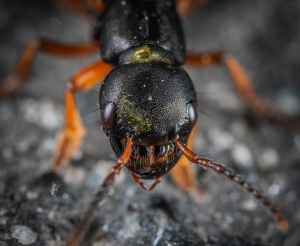
Kat hadn’t thought about the ant tattoo in years. Small and hidden, she’d forgotten about it until Grant found it accidentally. He renewed her interest, stroking it when massaging her shoulders, licking it during sex.
She’d gotten the tattoo at a beach town on a drunken dare. Now she wished she hadn’t. A reminder that love has unexpected consequences. That even family can’t be trusted. For Kat, the tat symbolized both escape and surrender. She considered removing it.
Knowing it’s the scars inside that matter, she didn’t. Repairing the surface is just the beginning of a journey to the self.
Maya had escaped death more than once. Fired from a cannon during her act with the circus, she had been mesmerized by shallow praise from the man who lit the fuse and held her cape. In the moments before ejection, her life flashed in front of her eyes.
More and more memories from her childhood emerged. It hadn’t been good. The slender thread of connection with the other performers broke. Seeking relief from her moody reverie, she fell in with a troop of acrobats who lived together in communal harmony and mindfulness. Cautiously, she explored her past. Joyfully, she recovered.
Angie wanted to act in Hollywood. She moved to LA, took a job at a cafe, and waited to be discovered.
Yoga strengthened her, put her in touch with her chakras. She realized that acting had brought her a shallow kind of security. Now she wanted more. At least enough to pay the rent.
Meditating her way into a sales career, she found that she was good at persuading people to buy what they wanted, whether they needed it or not. Convincing herself that the path to enlightenment had led her to this point, amassing things became her life goal.
Put women in charge. That’s the antidote to snake-oil salesmen working in a post-truth environment to steal your democracy. Endorsed by the New York Times: Elizabeth Warren has a plan and Amy Klobuchar can work. Restore dignity and fairness to civic life. There’s hope.
Pay no attention to juvenile slogans. Forget social media. Turn the television to another station or take a news break. Read escapist fiction. Whatever else, ignore the sad little man tweeting behind his Wall. Meditate on the image of him leaving office by military helicopter saying, “I can’t come back. I don’t know how it works.”
The door swings open. Your roommate pumps his fist and plops on the bed. “Winter break, here I come. Hey, wanna go skiing.” He’s always after you to relax.
You want to go, but you count every penny since your dad went bust in real estate. “La Jolla’s warmer. Mom would love to meet you.”
He agrees. Mom agrees. Everything is set. You’ve registered for classes next term, it’s dead week and you’re confident about finals. Then you get e-mail from the bursar. The autopay from your bank failed. Calling Mom, you hope your Dad hasn’t hacked the account again.







 Monica's Monday Morning Flash